
Collecting Guide
What Is Blotter Art? A Collector’s Guide
Picture a sheet of paper about the size of a large greeting card, covered edge to edge with a single illustration, and divided by tiny perforations into hundreds of identical squares. That is blotter art: a small, strange and very graphic corner of printmaking. Artists treat the sheet as a canvas, printers treat the perforation as part of the design, and collectors treat the finished piece as a framed print. This guide explains what the medium is, the formats you will meet, how to look after a sheet, and how to avoid buying a copy that is not what it claims to be.
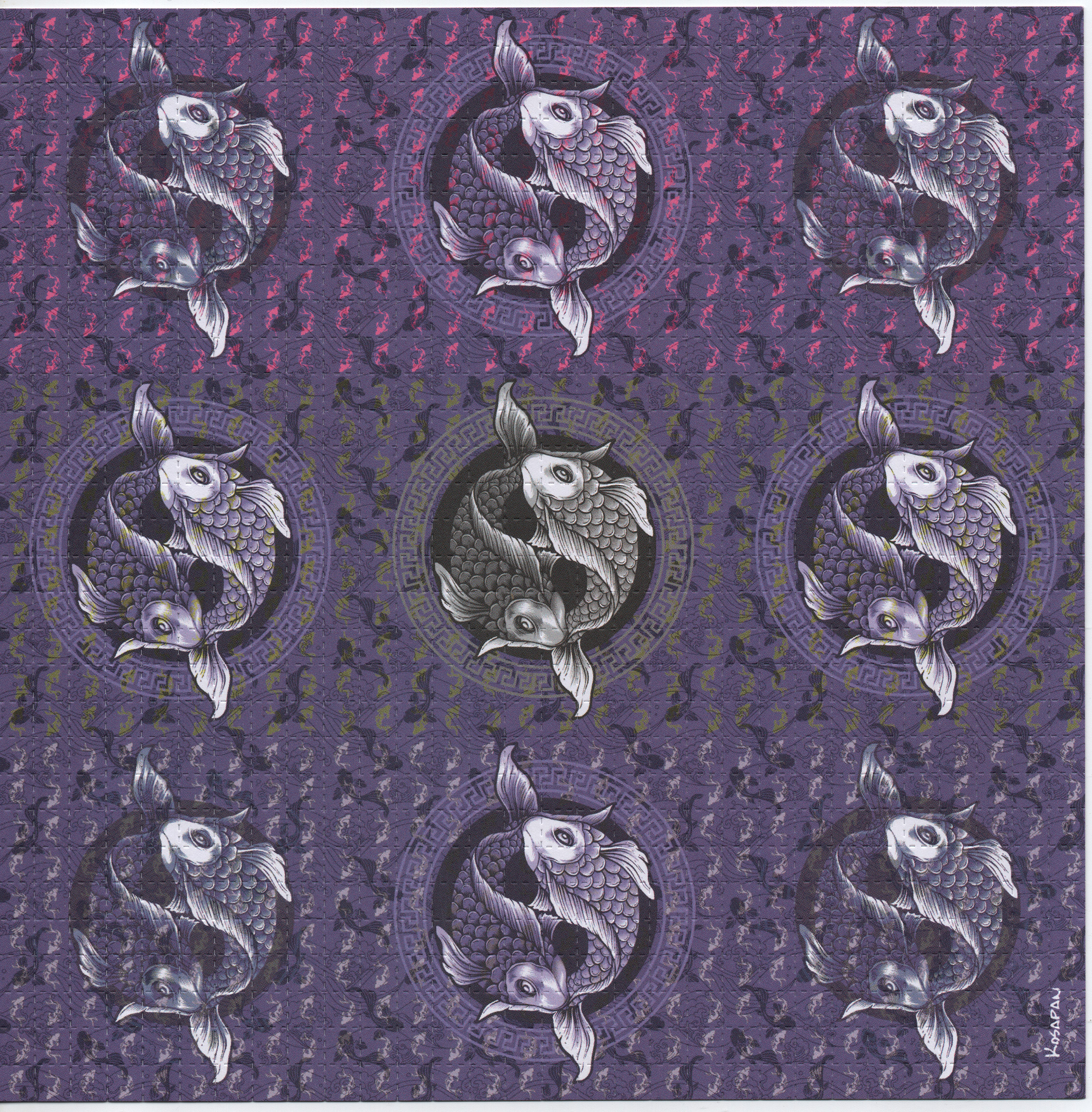
Blotter art in plain terms
Blotter art is artwork printed on absorbent, perforated paper. The sheet is usually square and is cut with a fine grid of perforations so that it breaks into small, uniform squares. A very common format is a sheet of about 7.5 inches on each side, perforated into a 30 by 30 grid of 900 quarter-inch squares. Other sizes and counts exist, including rectangular sheets with fewer squares.
What makes it different from a regular print is the structure. The image is designed to work twice: as one large picture across the whole sheet, and as a repeating pattern when you look closely at a few squares. Good designers plan both, and the perforation lines become part of the composition.
The sheets sold by serious art dealers are blank, unused prints made for collectors and for framing. They are art objects, in the same way a screenprint or a lithograph is.
A short, factual history
The best-known institutional collector is San Francisco artist and professor Mark McCloud, whose Institute of Illegal Images holds, in the words of a 2010 Mission Local report, more than 33,000 sheets and individual squares. Several hundred framed works hang in his home gallery, and much of the rest is kept away from harmful ultraviolet light. Framing and displaying the sheets treats them as graphic art that deserves a wall.
Over the decades the subject matter has ranged widely: cartoon characters, sacred geometry, mythology, satire, classical engravings and pure abstraction. That variety is part of the appeal for collectors, who often focus on a single artist, printer or theme.
The formats you will see
Learning the vocabulary makes listings far easier to read.
- Single-sided sheet. One printed face and a plain back. This is the standard format.
- Double-sided. Both faces carry artwork, which affects how the piece is framed. A double-sided sheet can be shown in a float frame or between two panes so both images can be seen. Kosapan’s Purple Carps is a double-sided limited edition of 50.
- 9-panel. A layout built from nine panels within a single sheet, giving the artist room for a larger composition or a set of related images. One example in the shop is Robert Marx’s Albert Hofmann Celebration Pink 9 Panel, a 7.5 by 7.5 inch sheet with 900 squares.
- Signed and numbered. The artist or printer signs the sheet and writes its number within a stated edition, for example 50 or 100. Edition size matters for rarity. Some listings also include artist’s proofs (AP), printed outside the numbered run.
- Odd-shaped sheets. Instead of a plain square, some sheets are cut or perforated into other outlines, so the shape itself becomes part of the artwork. They are harder to frame and often more sought after.
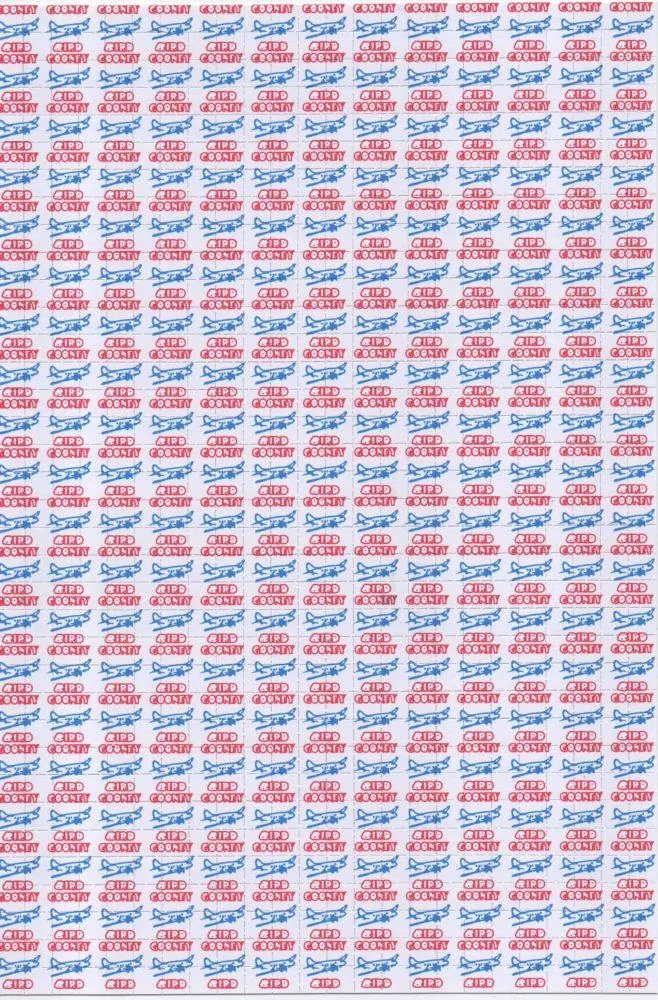
- Street sheets and vintage sheets. Older designs, sometimes with unknown artists, that collectors value as historical graphic ephemera. Originals are scarce, which is why reprints exist.

Originals versus reprints
An original is printed in the run that the artist or printer made at the time. A reprint, reproduction or “repro” is a later copy of an earlier design.
How to spot a reproduction
No single test is decisive, but these checks go a long way:
- Read the listing carefully. Words such as “reprint,” “repro,” “reproduction” or “tribute” are plain statements. Be wary of sellers who avoid them for a rare vintage design.
- Ask for provenance. Who printed it, when, and how did the seller acquire it? Reliable sellers can answer, and collectors often trace a sheet back through earlier owners.
- Check the edition information. Signature, numbering and edition size should be consistent with what the artist or printer has published. If a design is known to be a limited edition of 100, a number outside that range is a red flag.
- Look at print quality. Modern digital reprints can show softer detail, different paper stock, or perforation that is too clean or too regular compared with period examples.
- Be skeptical of bargains. A very rare sheet at a low price is far more likely to be a copy than a discovery.
Caring for a sheet
Paper is fragile, and these sheets are thin and often richly inked. Conservation guidance for works on paper applies directly.
- Block ultraviolet light. The Library of Congress and the Northeast Document Conservation Center both stress UV protection for framed paper. Ordinary glass and regular acrylic do not filter UV, so ask your framer for glazing that filters at least 99 percent of it.
- Keep it out of direct sun. Even with good glazing, hang works on paper in subdued light. If you own several sheets, rotate what you display.
- Use archival materials. That means acid-free, lignin-free mats and backing boards. Avoid tape and glue directly on the sheet.
- Leave space. The artwork should not touch the glazing. A mat window or spacers keeps a gap.
- Handle with clean, dry hands. Hold sheets by the edges and store unframed pieces flat in archival sleeves, away from damp and heat.
Because the perforation lines are part of the design, do not tear off squares or trim the margins. Many collectors prefer a sheet with its full edge intact.
Framing ideas
A single sheet looks striking in a simple, deep frame with a neutral mat that lets the colors do the work. For double-sided pieces, ask about a float mount or a frame that allows both faces to be seen. An experienced framer or paper conservator can advise on materials, which is money well spent on a limited edition.
Start with an artist you love
The easiest way into the field is to follow a name rather than a format. Browse the sheets by Mark McCloud to see how one of the field’s best-known figures approaches the sheet, then compare editions and formats across other artists in the collection. Every piece in the shop is a blank art print made for collectors, and the listings state clearly when a sheet is a reproduction.
Sources
- “LSD Museum or Institute of Illegal Images?”, Gregory Thomas, Mission Local, November 12, 2010 (page updated 2020). missionlocal.org
- “Preservation Guidelines for Matting and Framing”, Library of Congress (undated). loc.gov
- “4.10 Matting and Framing for Works on Paper and Photographs”, NEDCC (undated). nedcc.org
- Product listings for Purple Carps, Albert Hofmann Celebration Pink 9 Panel and Gooney Bird 1988, LSD Blotter Art (specifications and edition details, consulted November 2, 2026). lsdblotter.art
